Strengthening MIT’s Makerspace Ecosystem
Dear colleagues,
Later today, I will send an email (below the signature) to all students about our plans to strengthen MIT’s makerspace ecosystem. In brief, we have begun a process to strengthen our extracurricular, “open-to-all” makerspaces by…
integrating the Hobby Shop (currently in the Division of Student Life), Project Manus (in the Morningside Academy for Design), and the Edgerton Center (in the Division of Graduate and Undergraduate Education, or GUE) into a single organization housed within GUE;
expanding student participation through initiatives such as the Makerspace 1st-Year Training (M1T) program and the successful peer mentorship model;
fostering broader and deeper engagement through a newly formed makerspace governance committee composed of faculty, students, and staff; and
securing adequate, sustainable funding to keep shops and makerspaces thriving.
While most operational changes will be rolled out gradually, in June we will begin transitioning much of the function and programming of the Project Manus shop known as The Deep (37-072) to the basement of Building 6C, which is already home to the Edgerton Center’s Student Machine Shop and Electronics Lab and the Project Manus makerspace known as Metropolis. (Of note, in terms of space, The Deep, 806 sq. ft., amounts to ~6% of the total makerspace between Edgerton Center, Hobby Shop, and Project Manus.)
We are confident that, with the closer proximity and better utilization of the makerspaces in 6C, we can accommodate the current users of The Deep and minimize disruption to our student maker community. (Note: Additional context on this decision is included in the letter to students.)
These actions are motivated by a desire to make sure that the magic of making remains central to the spirit of mens et manus. Bringing together shops and maker spaces will help do just that. Further, to ensure we are best meeting student maker needs during this transition and beyond, we will solicit input through a short survey (to be sent in the coming weeks) on what’s working and what needs improvement. Expect communications about our findings and progress in the coming months.
I want to acknowledge the invaluable insights of three people with an intimate knowledge of making at MIT: Alex Slocum, a champion of making broadly and the Hobby Shop in particular, John Ochsendorf who leads the Morningside Academy for Design, and Maria Yang, formerly of Morningside, a vital new hub for MIT’s hands-on culture. In addition, J. Kim Vandiver, Professor of Mechanical Engineering and Director of both the Edgerton Center and Project Manus, has been (and will continue to be) instrumental in this work. Likewise, the makerspace staff have shared their firsthand knowledge and expertise. They truly are the heart of enabling student making on campus. Finally, this effort to strengthen open-to-all makerspaces would not have been possible without Provost Anantha Chandrakasan, who brought his passion and commitment to supporting student making.
Ultimately, making at MIT should be convenient, fun, safe, and accessible for students and consistently and appropriately supported financially. We are eager to look for new opportunities for the open-to-all makerspace ecosystem to contribute such that the whole is greater than the sum of the parts.
I believe the plan outlined above puts us on a path to achieve these goals. Please don’t hesitate to reach out with any questions or suggestions.
Sincerely,
Dave
David L. Darmofal
Vice Chancellor for Graduate and Undergraduate Education
Jerome B. Wiesner Professor
Interim Director, Undergraduate Advising Center
Dear students,
Making things and hands-on learning have always been an essential part of MIT. In particular, a lot of learning happens through extracurricular making—that is, making outside of academic departments and formal coursework. In the past, extracurricular or “open-to-all” maker resources have been spread across several organizations and spaces, each with their own goals and ways of engaging with students, with some facing serious financial challenges.
Looking at this landscape, we see an opportunity to better serve MIT students by centralizing open-to-all makerspaces and amplifying their best practices. Specifically, we will bring the following together into one organization and one team under the Edgerton Center within the Division of Graduate and Undergraduate Education (GUE):
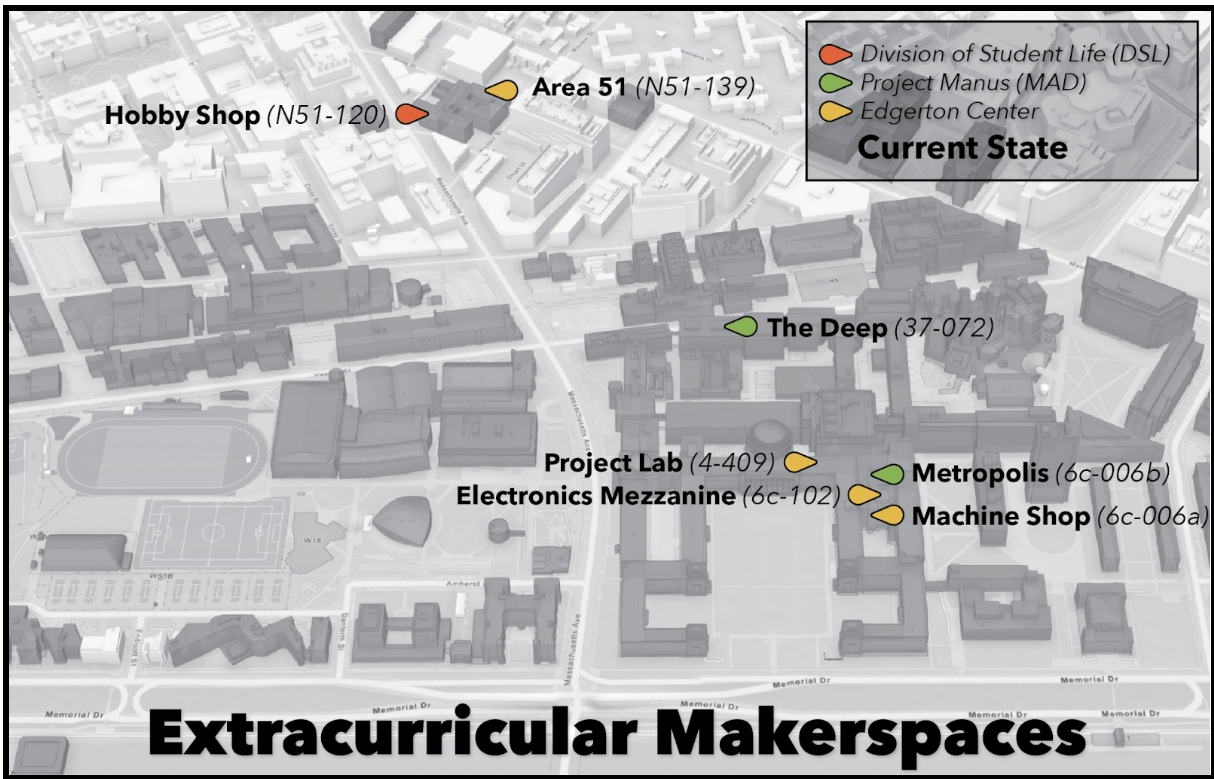
The Edgerton Center: The Edgerton Student Machine Shop, Electronics Mezzanine, Project Lab, and Area 51 (currently in GUE);
The Hobby Shop (in the Division of Student Life); and
Project Manus: Metropolis and The Deep (in Morningside Academy for Design).
Our goal in bringing these makerspaces together is to create more access for more students, helping everyone from first-years getting their first taste of making, to undergrads working on competition vehicles, to graduate students pursuing their own research or personal projects. We also plan to create a new makerspace governance committee composed of faculty, students, and staff.
Financial constraints were a key impetus to this plan. Even prior to the economic challenges MIT is currently facing, some of these makerspaces were dealing with significant budget constraints. To help address this, GUE has committed to redirecting ~$400k in existing endowment toward the open-to-all makerspaces. Also, with Provost Anantha Chandrakasan’s help, we will target new fundraising opportunities to put the shops on firm financial footing.
However, in addition to the new resources, we must optimize the use of our existing spaces. To this end, the operations of The Deep (37-072), including its student mentorship model, will transition to the basement of Building 6C, which is already home to the Edgerton Center’s Student Machine Shop and Electronics Lab and the Project Manus makerspace known as Metropolis. Starting in the 2026-2027 academic year, we will also pilot the elimination of the Hobby Shop’s student membership fee to broaden access and utilization of that shop.
For more information, see the FAQ below the signatures line.
Finally, we want to thank Provost Anantha Chandrakasan for his ongoing support and desire to strengthen open-to-all making and the makerspace staff who have shared their firsthand knowledge and expertise. They truly are the heart of enabling student making on campus.
We’re looking forward to working with you to ensure that our makerspaces remain a central and vital part of the MIT student experience for generations to come.
Sincerely,
Dave, Kim, John, Maria, and Alex
David L. Darmofal
Vice Chancellor for Graduate and Undergraduate Education
Jerome B. Wiesner Professor
Interim Director, Undergraduate Advising Center
J. Kim Vandiver
Professor of Mechanical and Ocean Engineering
Director, Edgerton Center
Director, Project Manus
John Ochsendorf
Class of 1942 Professor
Director, MIT Morningside Academy for Design
Maria Yang
Vice Provost for Faculty
William E. Leonhard (1940) Professor
Alexander Slocum
Walter M. and A. Hazel May Professor
Professor of Mechanical Engineering
FAQ
Where are the open-to-all makerspaces located?
What are the goals of enhancing MIT’s makerspace ecosystem?
We are aiming to:
Strengthen student participation in making by lowering barriers and increasing outreach.
Maintain the right mix of space, equipment, training, and expertise for a convenient, safe, and supportive making experience.
Facilitate navigation between shops and spaces.
Improve operational efficiency by streamlining and scaling shop systems.
Engage faculty, staff, and students in a governance capacity.
Secure adequate, sustainable funding to keep shops and makerspaces thriving.
Why is this happening now?
As many of you know, MIT is facing critical economic and budget challenges. As we worked to address financial challenges faced by some of the shops, we saw an opportunity to create a more accessible and seamless system to better serve MIT student makers.
Why integrate under GUE?
As a central home unaffiliated with any single school or department, GUE has made makerspaces a top divisional priority. GUE’s Office of Experiential Learning (OEL) is already home to the Edgerton Center, with four distinct makerspaces and the dynamic student clubs and teams like the Solar Electric Vehicle Team and Combat Robotics Club. We expect that the new organization will collaborate with related programs and existing makerspaces, including those in the Morningside Academy for Design (MAD), residence halls, and academic departments.
Who was consulted in the initial decision-making?
Leadership from MAD, DSL, and GUE explored the initial proposal to combine the makerspaces into one organization, along with input from makerspace staff.
What will change, and when?
We are aiming for the organizational restructuring to take place by July 1, 2026 (the start of the 2026-2027 fiscal year).
In our planning, we took a close look at the operational aspects of extracurricular making and have found that the capacity and use of the shops vary greatly and that there is under-utilized redundancy in some areas. Likewise, tools, expertise, and training do not always align with user demand.
One of the shops, The Deep (37-072), was launched in 2017 as a small R&D skunkworks. This summer, we will begin to transition much of The Deep’s function and programming to the basement of Building 6C, where Metropolis and the Edgerton Center’s Student Machine Shop and Electronics Lab are located. (Of note, in terms of space, The Deep, 806 sq. ft., amounts to ~6% of the total makerspace between Edgerton Center, Hobby Shop, and Project Manus.)
For many years, the Hobby Shop has charged a membership fee to all MIT community members, including students. Starting in the 2026-2027 academic year, we will pilot the elimination of these fees for MIT students.
In addition, GUE is changing some existing endowment allocations to this open-to-all makerspace effort, allocating $400,000 to help ensure near-term financial stability.
We expect other operational changes, such as program expansions or new systems, to happen more incrementally over the summer and into the following academic year.
Where can I provide input?
You can email makerspaces-feedback@mit.edu with any comments or suggestions. We will also send a brief survey this spring to student users of the Edgerton Center, Hobby Shop, and Project Manus makerspaces. Student feedback on what’s working well and what could be improved will help guide our next steps.